Research Method
Atrevol operates under a structured editorial methodology designed to maintain consistent quality standards across all published content. This page documents the full process from initial research sourcing through to publication and ongoing archive revision.
From Research to Archive
Source Identification
Jakarta, ongoing — All editorial topics originate from a structured source-mapping review. The editorial team identifies gaps in existing coverage of men's daily wellness habits, reviews recently published nutritional and fitness research, and cross-references patterns observed across reader correspondence received through the contact channel.
Priority topics are those where published research is robust, where practical application to an equatorial urban context is direct, and where existing online coverage contains either overstatement or demonstrably unsupported claims.
Research Compilation
Once a topic is approved for development, the assigned editor compiles relevant published research across a minimum of three primary sources. For nutritional content, sources include peer-reviewed journals in human nutrition, sports science, and related disciplines. For fitness and movement content, exercise physiology publications form the primary reference pool.
Secondary sources — including qualified wellness professional interviews and practitioner-observed data — supplement primary literature when appropriate. All sources are documented in the entry's reference footer. No claim is included in final copy without a traceable source in this compilation stage.
Draft and Contextualisation
The draft entry is written in the journal's documentary register, adapting source material for men living in an equatorial Indonesian urban environment. Generic Western-sourced guidance is recontextualised with reference to Jakarta's climate, available food supply, typical working patterns, and outdoor environment.
Entries avoid prescriptive language. The journal's position is that individual variation in response to lifestyle interventions is significant, and that any framework published here constitutes a reference point rather than a definitive instruction. This positioning is maintained consistently through the draft and editorial stages.
Four-Point Editorial Review
Every draft is reviewed against a four-point standard before publication approval. The four points are applied independently, with a separate reviewer assigned to points 1 and 2 (factual standards) and the lead editor responsible for points 3 and 4 (contextual relevance):
Specialist Verification
All nutritional guidance content is submitted to the journal's independent nutrition reviewer prior to publication. Movement and conditioning content goes to the movement specialist reviewer. Both reviewers hold recognised qualifications in their respective fields and operate under separate review agreements with the editorial office.
Reviewer notes are incorporated into the final entry. Where a reviewer raises a significant qualification or limitation, this is incorporated into the entry's body copy, not merely noted internally. Reviewer attribution is available in the entry's metadata footer on request.
Archive and Revision Schedule
Published entries are versioned and archived. Each entry carries a publication date and a version number (e.g., Rev. 01). The archive is reviewed against updated published research on a bi-annual cycle. Entries that require factual revision receive an updated version number and a revision notice appended above the entry header.
The previous version's key claims are preserved in the revision notice for transparency. Entries that have not required revision after two annual cycles receive a "Verified — No Revision Required" notation, indicating that current published research does not contradict the content.
Research Source Standards
The journal distinguishes between primary research sources (peer-reviewed publications, registered trial results, independent laboratory batch verification documents) and secondary commentary sources (qualified professional opinion, practitioner experience, secondary analysis).
Primary sources are always referenced over secondary sources when both address the same claim. Where only secondary sources are available for a particular claim, this is noted explicitly in the entry's sourcing footnote. Claims supported only by secondary sources are presented as observations, not established findings.
Atrevol is an independent wellness resource focused on everyday nutrition and active lifestyle practices for men. The content is not affiliated with any governmental or institutional body.

- — Peer-reviewed journals
- — Independent batch verification
- — Registered study results
- — Qualified practitioner data
- — Brand-funded studies
- — Unregistered informal trials
- — Anecdotal testimonials
- — Unattributed online summaries
Ingredient and Sourcing Documentation
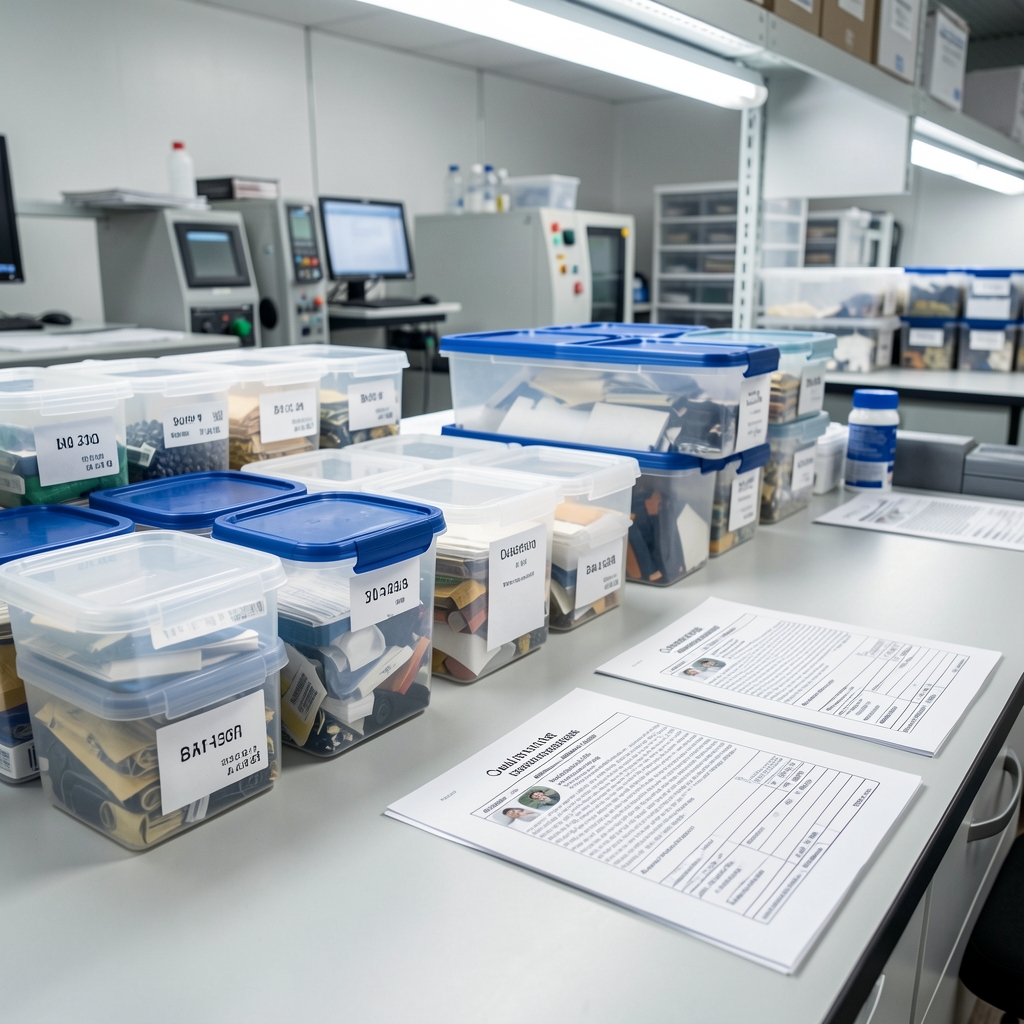
Where Atrevol publishes nutritional guidance referencing specific ingredients or supplement compositions, sourcing context is documented. Active ingredients referenced in nutritional content are drawn from suppliers whose facilities maintain food-grade processing standards.
Each batch referenced in editorial examples is accompanied by a certificate of composition in the editorial file. Sourcing prioritises suppliers with documented chain-of-custody records. The journal does not endorse specific commercial brands; ingredients are referenced in generic compositional terms.
Jakarta, 2024 — The sourcing documentation standard was strengthened to require independent batch verification for any ingredient referenced in quantitative nutritional guidance. Entries published before this revision were reviewed and supplemented with updated sourcing notes where required.
Ingredient profiles in Atrevol nutritional content are selected based on published nutritional research and undergo independent batch verification for quality and labelling accuracy.
Certificate of Composition
Every ingredient batch referenced in quantitative guidance carries a documented composition certificate held in the editorial archive.
Food-Grade Processing Standard
Referenced suppliers are evaluated against food-grade processing documentation. Non-compliant sources are excluded from editorial consideration.
Independent Verification
Third-party verification is required for any ingredient referenced in a quantitative context. Brand-funded verification documentation is not accepted.
Atrevol is an independent wellness resource focused on everyday nutrition and active lifestyle practices for men. The content is not affiliated with any governmental or institutional body.
The journal does not position its content as a substitute for professional guidance from a qualified wellness or nutrition professional. Readers with specific nutritional requirements or individual wellbeing considerations are encouraged to seek qualified professional input before making significant changes to their daily routines.
We recommend speaking with a qualified wellness or nutrition professional before introducing any supplement to your daily routine, particularly if you have specific dietary requirements.
All quantitative claims are sourced from published research applicable at the time of writing. The journal acknowledges that nutritional science is an evolving field and that conclusions supported by current research may be refined by future publication. The bi-annual revision process is designed to address this limitation systematically.
Methodology FAQ


Get in Touch
Editorial methodology questions and source citation requests are handled through the contact channel. The editorial team responds within 3–5 business days for research-related correspondence.
Contact the Editorial Team